

GRASPé Archive
Blog
April 10, 2008
Statement in Support of AGSEM’s Strike
McGill students and campus organizations support the Association of Graduate Students Employed at McGill in their strike for a new collective agreement with the university. At noon on Thursday, 10 April, we call on all students to join us in a demonstration of support and solidarity with our teaching assistants. The demonstration will take place at the Roddick Gates (corner of McGill College and Sherbrooke).
Why is undergraduate support for AGSEM so important?
The administration has made a concerted effort to divide undergraduate students, faculty, and teaching assistants from each other. In a mass email to all undergraduates[1], Deputy Provost Morton J. Mendelson portrayed the strike as a threat to students, suggesting that TA’s would attempt to obstruct students’ access to classes or exams. In an FAQ to students[2], the administration has misrepresented the demands of the TA’s as being primarily monetary, and fails to recognize AGSEM’s demands with regards to improving the quality of services to students, such as development of academic training for TA’s and the creation of caps on the size of conferences. This misrepresentation of the tactics and goals on the part of Mendelson and others in the McGill administration underscores the fact that their negotiations with AGSEM are not in good faith. It seems the administration would rather quash a strike with broad support of the university than take cooperative steps to improve the quality of educational services at McGill.
We recognize that the interests of the TA’s are our interests. We refuse to be divided from our teaching assistants.
The administration’s attacks on our TA’s’ union is particularly worrisome in the broader context of the administration’s assault against progressive organizations on campus. From CKUT, required to drop “McGill” from its station name, to the McGill Daily, an independent newspaper threatened this semester with funding cuts, to various student-run cafeterias on campus that have subsequently been contracted out to multinational food service corporations or forced to accept administrative controls by ancillary services, the administration continues to wage a war against autonomous student initiatives to improve the quality of life and democratic culture at McGill University.
What can I do?
Come out to the demonstration at the Roddick Gates at noon on April 10! We need as many undergrads as possible to put their weight behind the efforts of AGSEM if their demands are to be taken seriously by the administration.
Encourage your professors to cancel classes at noon at the time of the demonstration. Like you, faculty at McGill have been targets of divisive and untruthful communications by the administration regarding AGSEM’s demonstration and demands. Many professors feel threatened and afraid to take action in support of their TA’s. Reach out to your professors and send the message that their support is welcome!
Have your campus club, service, organization, departmental or faculty society endorse this statement of support and solidarity, which will be faxed to local media outlets on Thursday morning.
Let’s make sure that our voices are heard, and that we don’t leave our teaching assistants standing alone in the struggle for better educational services!
[1] Strike by Teaching Assistants and Demonstrators at McGill, mass email sent by Mendelson to all undergraduates at 3:44 AM on Tuesday, April 8, 2008.
[2]TA Strike FAQ for Students
February 25, 2008
Students dying to demilitarize McGill
By Mikey Opatowski and Melissa Karine Ward
McGill Daily News Writers

Seventeen student activists dropped dead in McConnell Engineering yesterday morning to protest campus military recruitment.
The students, members of the radical campus group GrassRoots Association for Student Power (GRASPé), smeared themselves in red paint and lay still for ten minutes in front of a Canadian Forces table at the Technology Career Fair.
“I don’t think its right for military recruiters to be here at all,” said Dave Howden, one of the participants in the die-in. “They’re misleading students that the army is all about an exciting career and travelling the world.”
The recruiters stood watch during the action and did not talk with any of the protesters. In an interview after the die-in, Lt. Serge Abergel spoke politely of the protesters but defended his presence at the career fair.
“It was polite, peaceful, no bad things to say about it,” Abergel said, adding, “We are simply giving information about employment opportunities for over 107 different trades, not just infantry. We are not imposing that people join the military, nor have quotas to reach.”
Bystanders trying to make their way around the protesters said they were impressed by the die-in, but were not opposed to on-campus military recruitment.
Other GRASPé members handed out flyers that challenged Canada’s role in the Afghanistan occupation and argued against students enlisting to finance postsecondary education.
Lt. Sean Frankham, who was also recruiting at the fair, defended serving in the army to pay for school.
“That’s how I got through school,” Frankham said. “And there was never any problem with that.”
The protesters left peacefully, chanting, “Recruiters lie, students die.”
The mobilization stemmed from a workshop that GRASPé members Alexandre Vidal and Cleve Higgins coordinated on Monday evening. About 20 students attended the gathering, which fostered ideas on ways to eliminate military presence and influence at McGill.
Focusing on government investment in the military and recruitment on campus, Vidal and Higgins presented results of research they completed on the relationship between universities and the military.
Vidal, who opposes Canada’s involvement in the Afghanistan occupation, asserted that government investments directed to the military should instead be used to pay for student tuition fees.
“I don’t want my tax dollars to go towards things I disapprove of, like people being killed in Afghanistan,” Vidal said.
“The 13 per cent of annual funds currently paying for military supplies could be used to abolish tuition fees for all Quebec students,” he added.
The discussion proceeded to dissect how recruitment processes work, what kind of people they attract, and why.
Students in the rank force must spend their summers at school, and attend a postsecondary institution for an additional five years after completing their enrolment. Enlisted students who break their contracts are required to reimburse the government for the difference of their tuition costs.
Higgins focused his presentation on changes that should be made to improve transparency in McGill’s research policies, suggesting that the University make its harm evaluations publicly accessible and oppose confidentiality agreements with corporations.
GRASPé is planning additional protests in front of Montreal’s recruitment centre and will work to “demilitarize McGill” by advocating the prohibition of recruiters on campus.
Last year Higgins discovered that McGill engineering professor David Frost received funding from Defence & Research Development Canada (DRDC) – and worked in conjunction with a DRDC employee Fan Zhang – for a 2006 paper, “Effect on Scale of a Blast Wave from a Metalized Explosive.”
For the paper, Zhang received research funding from the Defense Threat Reduction Agency, a combat support division of the U.S. Department of Defense that has commissioned research on explosives used by the U.S. military in Iraq and Afghanistan.
January 14, 2008
Tuition Goes Up, Students Disrupt!
Well a new semester is upon us, and with it comes yet another few months of relentless student action and organizing. The efforts from last semester, specifically with regards to free and accessible education, continue into the new year as students across the province prepare for an even more co-ordinated and active push for a new kind of quality post-secondary education — one that is democratic, publicly funded, and free of barriers, be they financial or social.
Last week, GRASPe kicked off the new semester with an occupation of the James Adminstration building. Below is the communique realeased by GRASPe as the action took place. We encourage any- and everyone to respond to or comment on either the communique, the action itself, or the issue of free and accessible
education.
Make Education Accessible: Stop the Deregulation of Tuition
Our educational system is in crisis. Postsecondary education in Quebec is running a $400 million deficit. The average student debt in Quebec is $12,300. This situation is bound to get worse as both federal and provincial funding to universities are slashed. Money that would have gone to educate young Canadians has been diverted to finance the national debt, engage in military escapades abroad, and serve corporate tax cuts. Since the mid-1980’s the amount that Canada spends on postsecondary education has fallen from 0.56% to 0.19% of GDP, creating a fiscal surplus that was spent on the national debt. Our university is under-funded, not because of a scarcity of money, but because of a political choice to starve the educational system of public funds at the expense of students, who pay down the national debt by taking on higher personal debt.
The $1200/semester hikes being phased in by the provincial government will not raise enough money to solve the under-funding crisis. All that they achieve is to limit access to postsecondary education for the poorest students. The Quebec Department of Education expects that one in ten students will no longer be able to afford their degree once the tuition hike is fully phased in. Tuition deregulation will not close the education budget gap. It will not significantly improve the quality of education. It will become a serious barrier to university education for thousands of young people.
The McGill administration has advocated for and been party to the public divestment from education. In presentations before the Comission de l’éducation de L’Assemblée nationale du Quebec, the Chambre du Commerce de Montréal Principal, and elsewhere Heather Monroe-Blum has been the leading voice for tuition deregulation. Behind closed doors the administration has hiked ancillary fees to the point that McGill is now the least affordable school in the province. McGill has failed to consult its students before undertaking the decision to raise fees. How could the institution fail to ask more than 23,000 stakeholders in this decision to increase tuition how they felt about it?
The policy of fee increases comes from the centre of power at McGill University. Today, that centre of power is in the control of students, and we refuse to allow our voices to be silenced or ignored. We are occupying the administrative headquarters of McGill in order to demand a better solution to the under-funding crisis in Quebec’s education system. This solution cannot come out of the pockets of students and voluntary private donations alone. It needs to come from the creation of dedicated public funding for post-secondary education. It is high time that the federal and provincial governments stop taking money out of the educational system, and start taking responsibility for guaranteeing every person the right to an education!
The McGill students’ occupation of the James Administration Building is the beginning of a province-wide semester of resistance as students everywhere stand up against the tuition hikes and in defense of an affordable, accessible education for all. We encourage students across the province to speak out, disrupt business as usual on their campuses and stand together in the struggle to ensure that our voices are heard.
October 30, 2007
What SSMU bigwigs don’t GRASP[é]
Following the walkout scandal at the last General Assembly, there was talk about the possibility of impeaching the Students’ Society executives implicated in coordinating the walkout. Though it’s refreshing to see discussion among students about holding our executives to account for their actions, what happened at the GA was just an exceptionally blatant example of the normal political culture at SSMU. Removing executives from office isn’t going to change that culture. An impeachment campaign is sort of like an electoral campaign in reverse-it only replaces the individuals who claim to represent us, not the institutional context in which they do it. To democratize the political culture of SSMU, or any other institution, there must be more direct, grassroots participation by students who aren’t full time politicians. Rather than perpetually trying to find the right person to represent us, we have to start representing ourselves.
There are a lot of problems with the way SSMU works. Some of them, such as a lack of student awareness or involvement, are perennially identified by wannabe student politicians during their election campaigns. Of course, once they’ve gotten themselves waist-deep in the insular, bureaucratic morass of the Society, their ability and inclination to actually work on changing the degree of student participation becomes very limited. Another important, though less frequently discussed, problem with the political culture at SSMU is the close affinity of interests that can easily develop between executives and the McGill administration. Clearly, becoming a SSMU executive isn’t the top rung on anyone’s career ladder, and many student politicians have plans to continue their ascent. A good relationship with the admin, and the recommendation letters and informal connections that go along with it, can be an important consideration for those who trying to make their way to the top.
We reject this hierarchical world of bureaucracy and corruption in which we’re supposedly being “represented” by these student politicians. So how can it be changed? We definitely don’t have all the answers, but we do believe that greater participation through General Assemblies is a step in the right direction. As former SSMU councillor Lazar Konforti pointed out before he graduated, the main difference between Council and a GA is that the “vain ambition to pad one’s CV, the single most defining feature of the bullshit that is campus politics, doesn’t rear its ugly head at GAs.” The GA circumvents all the CV-padding, admin schmoozing, back-room dealing, “bullshit” of student politics, and allows for students to directly represent ourselves in discussion and decision-making on issues that we feel are important.
Unfortunately, the success of GAs depends on support from the rest of SSMU. This was made clear at the last GA, when the lacklustre mobilization effort by SSMU led to attendance low enough that a walkout could break quorum. This was also clear at the SSMU Council meeting last Thursday, where there was a referendum question approved that would change the way GAs work. Of course, all students will get to vote for or against the proposed changes, but we didn’t get much input on what changes are being proposed. The most significant change is that if less than 400 people show up at the GA, the decisions made will be put to an online vote, just like a referendum question. The problem with this proposal is that if every motion that gets voted on in the GA gets put to online vote, the GA will not have decision making power in and of itself, and there will be less reason for students to show up. However, if SSMU can do its job and mobilize sufficient student participation to meet the ratification quorum, GAs won’t slowly become a poorly attended consultation process for referendum questions.
SSMU is soon going to get a chance to prove whether it can fulfill its obligations to mobilize for GAs. There has been a Special General Assembly called for Nov. 13 to pick up where the regular GA left off. In order to help SSMU with preparation for this GA, GRASPé has provided them with a comprehensive mobilization plan. We hope that effective mobilization for the GA can make it a more powerful, democratic process that can actually start to open up the political culture of our student union through more grassroots participation.
October 30, 2007
SSMU smushed Tuesday’s GA
It’s General Assembly time again at SSMU, but who would know it? Over the last week SSMU has sprinkled campus with some of the most uninspiring General Assembly (GA) publicity since their failure to spread the word about last fall’s GA. The white 8.5×11 posters and the ads taken out too late in campus newspapers not only fail inform the student body, they fail to give you the information you need to get a motion on the agenda.
SSMU would have you believe that motions can either be emailed in or referred by Council. Whoops! They can’t. In reality, as per SSMU’s own constitution, you need the signatures of either 100 students from 4 faculties or 4 SSMU councillors, and you need to hand them in. This comes after they botched the initial scheduling of the GA. A unilingual Facebook event set the original due date for motions in the third week of classes, as the constitution mandates the GA to be held in the fifth week. It wasn’t until late in the third week that we learned that the GA had been scheduled for the sixth week, and the due date had been moved.
What’s going on here, and why should we care about the fumblings of SSMU? For all intents and purposes, SSMU is undermining the accessibility of the decision-making process. Because SSMU misinformed the general membership, only the political elite (ourselves included) were able to set the agenda of the GA. Last winter, in the only well-advertised GA to date, motions came from everywhere. This fall, as a result of SSMU’s failure, it is a very different tale. Contrary to what the opponents of direct democracy might have you believe, we couldn’t be more upset that our motions comprise a shocking 80 per cent of the agenda.
SSMU appears afraid that the membership might have their own ideas about the way things should be run. Student associations across Quebec manage to have general assemblies very regularly. They are able to do this without too much trouble, despite the fact that many of these associations have less resources available to them than SSMU does. Is it really that hard to print attractive posters, take out readable ads in the campus newspapers, and include all of the relevant information? When it comes to the basic tenants of democratic functioning, our student union is a disgrace.
It is deeply disturbing that this passive undermining of democracy on campus is under the leadership of known GA-hater Jake Itzkowitz, President of SSMU. He works full-time on the student dime to, among other things, enforce the SSMU constitution. Advertising for the GA is therefore his responsibility. We know Itzkowitz would like to get rid of GAs altogether, but now he’s done the next best thing by allowing the agenda-setting process to fail. There’s no better way to kill a fledging endeavour than to ignore it. If you’re anticipating a reversal of the student union’s pathetic negligence, don’t hold your breath: you might go the way of democracy at SSMU.
The Grassroots Association for Student Power (GRASPé) is a radical leftist student group that frequently co-opts The Daily’s editorial pages.
September 20, 2007
Support Architecture Café: keep it student run!
Negotiations are ongoing between the Architecture Students’ Association (ASA) and the University Administration over the future of that most beloved of campus sources of nourishment, the Architecture Café. It appears, for the time being, that the Café will reopen. The only question that remains is that of management and administration. Will the Café’s finances, payroll, and other top decisions be made by the Administration, or students? Will we soon return to eating zaatars at our favorite student-run café, or “McGill Food services presents: the Architecture Café”?
The question of student control is key. The only reason the Architecture café is our favorite is that it is run by students. If the University takes final decision-making authority away from students it is only a matter of time before the Café starts feeling more like a Chartwells.
GRASPé proposes that the University adopt a “university-wide strategy to serve the entire community”, as Morton Mendelson puts it, that is based on student association administration of all food services. The Architecture Café should be the model for this new strategy.
GRASPé proposes as well that the University adopt as a guiding principle, including for its “University Operations”, that students should at no time be a source of revenue for the University either directly or through the profits of an external party.
September 12, 2007
La grève: un moyen solidaire
McGill a la facture étudiante la plus élevée au Québec. Pourtant suite au gel imposé en 1994, nous devrions payer tous et toutes la même facture. La présence de frais afférents et de droits de scolarité mènent à cette disparité financière qui mine notre droit à l’éducation. La question à se poser est plutôt; pourquoi payer pour ce qui est notre droit aux connaissances, la passage du savoir intergénérationnel?
La gratuité scolaire post-secondaire est estimée à 550 millions selon une recherche menée par l’IRIS. Cette somme représente environ 13% de notre budget militaire. De surcroît, le gouvernement a décidé dernièrement d’acheter 100 chars d’assaut revenant à un investissement de 650 millions. Somme toute, la gratuité scolaire est un choix de société, de priorité. Selon Statistiques Canada, 70% des Canadiennes et Canadiens identifient la barrière financière comme étant la raison de leur interruption d’étude au niveau post-secondaire. L’éducation permet à une amélioration des conditions sociales, actuellement réservée à l’élite économique de la société. Cela ne permet pas à la population entière d’accéder et de contribuer au développement des connaissances effectuées au sein même de nos institutions.
Ce choix sociétaire ne peut provenir d’un gouvernement prônant la marchandisation de la connaissance, la privatisation de notre éducation. Il est imminent d’entreprendre une lutte sociale face à cette inégalité élitiste: la grève. Celle-ci est le moyen ultime faisant suite à diverses actions entreprises pour faire entendre la frustration découlant de cette injustice. Demeurer inactifs entraînera des abus, tel que la hausse de 500$ prévus sur cinq ans à laquelle nous faisons face et le financement de notre éducation par les compagnies privées tel que Chartwell à McGill. Sans solidarité à la grève imminente, annoncée cette session-ci, nous ne pouvons obtenir une accessibilité universelle.
September 11, 2007
Mobilize for free education
While most of us were otherwise occupied during the summer, the first budget from the new minority Liberal government brought some bad news: the freeze on Quebec tuition fees is now a thing of the past. Clearly, the Liberals and their leader Jean Charest were unfazed by their near defeat in last March’s election as well as the massive opposition coming from all sectors of the student movement. Tuition fees are set to be hiked each semester over the next five years, granting the fondest wish of our dear Principal Heather Munroe-Blum and leaving low-income students plumb out of luck.
Or maybe not. Students across Quebec have served notice that they won’t tolerate this most recent assault on accessible education, and are gearing up for a province-wide strike similar to the one seen here in 2005. Think thousands-strong marches, blocked bridges and occupied schools.
This strike, however, is about more than just the tuition freeze. Mobilization on such a massive scale cannot simply be centred around defense of a bygone status quo. Student associations spanning many political orientations—including the more radical l’Association pour une solidarité syndicale étudiante (ASSÉ), but also an independent coalition nurtured by our very own SSMU – are demanding the gradual elimination of all tuition fees. For too long universities have served to reproduce social divisions in an already–fractured society. Charest should be worried: Quebec students are more than ready to defend their right to an education, and a vision of society where financial means do not restrict life choices.
McGill students have an important role to play in the weeks to come. While it’s true that we attend an institution frequently associated with the financial elite, many of us are also suffering under the heavy weight of government loans and the demands of creditors. Out-of-province and international students are already paying massive differential fees on top of Quebec tuition, the latter at illegally-high levels. Our administration continues to be a prominent voice for the corporatization of education, turning a public good into a private commodity and saving education for the lucky few. Despite the unique place that we occupy in Quebec as a large anglophone institution, we too can and should be an important force for change. We need to be fighting on campus and in the streets in solidarity with other Quebec students, but also for our own right to an accessible education. The time for apathy has passed it’s time to strike!
The GrassRoots Association for Student Power is a radical student collective at McGill.
September 2, 2007
Back from Summer!
GRASPé is back from its usual summer lull and ready to start another year!
The Quebec government has once again turned its back on accessible education and has plans to raise tuition, breaking the long-standing freeze of student fees. In response, the student movement will be stepping up the fight. As with the strike in 2005, GRASPé will be working to bring this struggle to the McGill campus, demanding the elimination of all financial barriers to education.
Over the summer the McGill administration has continued their systematic attacks on student space at our university. Ancillary Services broke an oral agreement that allowed for the operation of the student-run Architecture Cafe, and told the Architecture Student Association (ASA) that the space could either become a student lounge without food services or a corporate cafe run by Chartwells or Starbucks. As the ASA says on their website, “we have to take a stand against Ancillary Services’ attempts to undermine student interests in favor of their corporate interests….We recognize that this should not only be a fight from within the School of Architecture, but a university-wide fight!”
Overall, the need for autonomous resistance to government and administrative bureaucracy is greater than ever. GRASPé will continue to mobilize students in the interests of a free, accessible and decorporatized education, and you can join the fun! Come to our orientation session Thursday, September 6 at 5:30 PM, on the front steps of the Arts Building.
April 10, 2007
SSMU Presidential By-Election : Vote Now!
Due to serious electoral violations committed against Floh Herra Vega’s campaign, the Judicial Board has ruled that the results of the SSMU presidential race are invalid and has called a 2 day election. Voting will run from Tuesday until Wednesday, with no campaigning.
For more information, check out the McGill Daily article at http://www.mcgilldaily.com/view.php?aid=6161 or www.electionsmcgill.ca.
Vote online NOW until Wednesday at 4:45PM at ovs.ssmu.mcgill.ca
February 5, 2007
National Day of Action to Stop Tuition Fee Hikes
The Canadian Federation of Students (CFS), Canada’s largest student federal representative body, called for a National Day of Action to stop tuition fee hikes, to be held on this Thursday, February 7th. In Montreal, protesters will meet at Parc Norman-Bethune (Concordia University, Metro Guy) at 1pm and march to Jean Charest’s office on the corner of Sherbrooke Street and McGill College. As Charest’s office is just accross the street from McGill, SSMU will be holding its rally at the Roddick Gates at 1:30pm and will simply wait for the other groups to show up. Since last Thursday’s GA, SSMU’s official policy is that tuition should be competely abolished, so we’re hoping that all those folks who voted in favour of that resolution show their pretty faces on Feb. 7th!
February 2, 2007
McGill Undergraduates Vote for Free Education
On February 1, about 250 members of the Student Society of McGill University (SSMU) gathered in an auditorium for their second general assembly (GA) of the year. 4 out of the 6 motions on the agenda were adopted, sometimes unanimously, after 3 hours of debate. The two motions concerning the blood drive ban in the Shatner Building were deemed unconstitutional by the Speaker and were thus discarded when the assembly voted to go along with the Speaker’s interpretation of SSMU’s constitution. Aside from these two motions, the most heated debate was related to a motion initiated by NDP-McGill that mandated SSMU to “[call] for the elimination of all financial barriers to a high-quality post-secondary education, and advocate for a progressive reduction of tuition for all students, including the eventual elimination of ancillary and tuition fees.” While, not naming it explicitly, this represents an endorsment by the SSMU’s GA of the principle of free education, an historical moment in an university that is not renowned for its student activism.
From an opposition to lifting the tuition freeze to free education
The traditional position of the SSMU has always been in favor of maintaining the freeze on tuition fees. In fact, the most recent challenges to this policy has been an aborted attempt by SSMU’s Community and Government Committee to pass a new policy proposing to peg tuition fees to inflation in exchange for an improved loans and bursaries program. The document, which was presented by former VP Community and Government Daniel Friedlaender, was thankfully never adopted by SSMU’s council because of important opposition from councillors and students (marked by Friedlaender’s pieing). In fact, it all came to an end when Québec students massively went on strike against cuts in the loans and bursaries program not too long after, a strike that McGill students participated in.
The adoption of a position on free education by SSMU’s GA is thus an important change in policy. It brings McGill closer to the rest of the Québec student movement where free education has always been a central demand. It also gives SSMU a stronger policy in preparation for an anticipated lifting of the tuition freeze after the next provincial elections. Finally, it is a sound policy that takes into account the current inequalities with respect to access to education in Québec (see previous post for more details).
From policy to action
It is one thing to vote on a policy, but it is another thing to have it enforced. McGill ancillary fees are the highest in Québec and keep increasing every year. The best example of this is a planned $1,000 increase in ancillary fees for music students taking required private lessons at Schulich School of Music. Meanwhile, Heather Munroe-Blum (McGill’s Principal) is proposing to increase tuition fees by 300%. It is thus important that this new SSMU policy translates into more combative tactics to defend accessibility to action. With respect to this, its participation in a pan-canadian day of action of February 7th is a good start. But SSMU will also need to start confronting Munroe-Blum on her position. And in the eventuality of a tuition fees defreeze, it will need to start considering going to strike again. Most likely for more than one day.
January 27, 2007
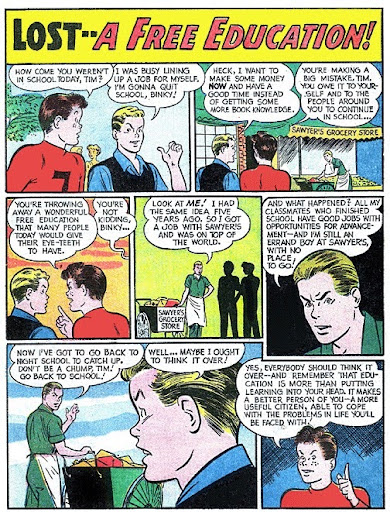
Don’t waste your education… it’s free!
On February 1, about 250 members of the Student Society of McGill University (SSMU) gathered in an auditorium for their second general assembly (GA) of the year. 4 out of the 6 motions on the agenda were adopted, sometimes unanimously, after 3 hours of debate. The two motions concerning the blood drive ban in the Shatner Building were deemed unconstitutional by the Speaker and were thus discarded when the assembly voted to go along with the Speaker’s interpretation of SSMU’s constitution. Aside from these two motions, the most heated debate was related to a motion initiated by NDP-McGill that mandated SSMU to “[call] for the elimination of all financial barriers to a high-quality post-secondary education, and advocate for a progressive reduction of tuition for all students, including the eventual elimination of ancillary and tuition fees.” While, not naming it explicitly, this represents an endorsment by the SSMU’s GA of the principle of free education, an historical moment in an university that is not renowned for its student activism.
From an opposition to lifting the tuition freeze to free education
The traditional position of the SSMU has always been in favor of maintaining the freeze on tuition fees. In fact, the most recent challenges to this policy has been an aborted attempt by SSMU’s Community and Government Committee to pass a new policy proposing to peg tuition fees to inflation in exchange for an improved loans and bursaries program. The document, which was presented by former VP Community and Government Daniel Friedlaender, was thankfully never adopted by SSMU’s council because of important opposition from councillors and students (marked by Friedlaender’s pieing). In fact, it all came to an end when Québec students massively went on strike against cuts in the loans and bursaries program not too long after, a strike that McGill students participated in.
The adoption of a position on free education by SSMU’s GA is thus an important change in policy. It brings McGill closer to the rest of the Québec student movement where free education has always been a central demand. It also gives SSMU a stronger policy in preparation for an anticipated lifting of the tuition freeze after the next provincial elections. Finally, it is a sound policy that takes into account the current inequalities with respect to access to education in Québec (see previous post for more details).
From policy to action
It is one thing to vote on a policy, but it is another thing to have it enforced. McGill ancillary fees are the highest in Québec and keep increasing every year. The best example of this is a planned $1,000 increase in ancillary fees for music students taking required private lessons at Schulich School of Music. Meanwhile, Heather Munroe-Blum (McGill’s Principal) is proposing to increase tuition fees by 300%. It is thus important that this new SSMU policy translates into more combative tactics to defend accessibility to action. With respect to this, its participation in a pan-canadian day of action of February 7th is a good start. But SSMU will also need to start confronting Munroe-Blum on her position. And in the eventuality of a tuition fees defreeze, it will need to start considering going to strike again. Most likely for more than one day.
January 25, 2007
Debate on free education heating up
In this election year, the debate on who should bear the costs of education is heating up. Most of our economic and political elite is advocating for lifting the tuition freeze, effectively arguing for a transfer of the burden of funding the education system to students. We believe that this vision of education is regressive and short-sighted. For us, the first step in guaranteeing equal access to post-secondary education to everybody, whatever their socio-economic origin, is to have free education. This semester, we will campaign actively with other groups to promote the idea of a just, accesible education system.
A bit of history
For as long as the Québec student movement has existed, free education has been a central demand in the struggle for a universally accessible education system. In fact, Québec tuition fees have remained frozen throughout the sixties, seventies and eighties and it was not until 1990 that University fees were lifted. At that time, the student movement was experiencing a major restructuring that saw the collapse of militant ANEEQ and the establishment of the two concertationist student federations (FECQ and FEUQ) as the dominant student organization, and was thus unable to fight back.
Tuition fees were once again frozen in 1994 and since then the federations’ agenda has been focused on preventing a defreeze. The free education discourse has been somewhat marginalized during this period of massive neoliberal offensive – with the notable exception of the MDE, which spearheaded the 1996 general strike against a new defreeze – but it has been recently vigorously renewed by the Association pour une solidarité syndicale étudiante (ASSÉ) during the 2005 student strike.
In this election year, the debate around tuition fees is once again in the air. The administration of most universities (beginning with McGill’s) are advocating, alongside their ideological allies, for a lift of the current tuition freeze. Meanwhile, the government has asked a Sherbrooke professor to research the “economic” consequences of various scenarios ranging from the establishment of free education to a massive increase in tuition fees. In fact, we are probably on the verge of one of the most important tuition fee increase in Québec’s history. If the FEUQ-FECQ duo is, as usual, advocating for maintaining tuitions at their current level, ASSÉ is campaigning actively for the implementation of free education.
A question of justice
If we believe in free education it’s because we believe in an holistic view on the meaning of education and the role it plays in society. Ultimately education should be there to generate and diffuse ideas, critical thought, social debate as well as create new knowledge. Education indeed gives people the means to achieve their personal goals and take control of their lives, but it also gives them a better understanding of how to speak and act in the public realm and thus to actively participate in it. If we believe that everybody should have the opportunity to become active social actors and to be able to fulfill their dreams then a universally accessible education system is a political choice. The key to making education universally accessible is, in the short run, reducing the “barriers to entry”. From this perspective, free education is the least we can do.
Those that support the lifting of the tuition freeze argue that it would not decrease accessibility because people will still be ready to pay to increase their social capital if it brings about a better paying job in the end. They also propose that income-based loans and bursaries would more than compensate for the higher tuitions. This is an illusion. Numerous studies (see the IRIS study published just a few days ago) have shown that as the cost of education rises, so does student debt, while at the same time the proportion of students with lower incomes attending universities falls. Furthermore, there is no guarantee that our loans and bursaries program will be improved following a potential defreeze. On the contrary, the current tendency is to transfer funds from bursaries to loans and thus to increase student debt.
There is a serious disconnect between the reasons given for maintaining or increasing the costs of education and the actual results of these policies. The rhetoric used is the cry of “our universities are under-funded!” Raising tuition, however, does not solve the problem of under-funding; it merely compensates the cuts in the education budget by transferring the burden of funding it to the students. This is part of an active restructuring of society along the dictates of neo-liberal economics that is also visible in all the other services provided by the government. Transferring the cost burden to the individual is however a socially regressive measure because while the public transit, electricity, daycare, and education tariffs increase the revenues of the lower quintiles remain stagnant.
Free education entails a shift in our conception of education, as well as a general change in the structure of our society. Thus, we see the struggle for free education as part of a larger challenge to the neoliberal socio-economic agenda that has become the norm for so many governments around the world. We recognize that these larger social changes outside of the education system are necessary in order for education to be truly accessible to all, but free education is an important first step.
Take action!
GRASPé has thus decided to actively join ASSÉ’s campaign, which will culminate in a one-day strike and a national demonstration on March 29. As part of our local campaign, we plan to raise awareness on the subject amongst McGill students by distributing leaflets, collecting signatures for an ASSÉ petition, supporting NDP-McGill’s motion at SSMU’s general assembly, and mobilizing for the March 29 manifestation. Although McGill does not have a history of activism and although free education is often viewed as yet another stupid idea from the left, we believe that it is a strict minimum towards the establishment of a just and accessible education. And believe us, we will do everything in our power to win this debate and defend the right to education.
For a brief history of the Québec student movement, click here.
Another good review by The McGill Daily can be found here.
ASSÉ has also released a preliminary version of its research on free education.
January 16, 2007
Welcome!
Since the password to our previous blog was lost, we didn’t have a website to present who we are, what we do and why we do it. We wish to welcome you to our new blog, which gives information on the GrassRoots Assoaciation for Student Power / Groupe d’action et de sensibilisation au pouvoir étudiant. Feel free to comment on anything, to send us feedbacks or to come to our events. If you want to get involved at McGill, a good start is to come to one of our meetings. Visit our blog regularly, as it will be updated every week.
All information has been extracted from the GRASPé-McGill website. This work is not our own*
Here is the webarchive page: